
New Bridge Release Destinations
The Bergen County Sheriff identifies a secure inpatient medical unit at Bergen New Bridge Medical Center in Paramus, also called 14 D-1 in official material. It serves county-jail patients who need hospital admission while security remains in place. The unit is not an independent booking jail. BCCRC remains the key custody source, and the legal authority for confinement still comes from the relevant court or agency.
A patient may return to BCCRC after treatment. Another lawful outcome can be continued secure treatment, movement to another facility, or release to community care after the custody authority permits it. In some cases, staff contact the Psychiatric Emergency Screening Program when mental illness may create danger to the person or others at release. That assessment is a safety and release-processing step. It does not, by itself, identify the legal release type or prove that discharge occurred.
| Medical-unit event | Custody meaning | Confirmation source |
|---|---|---|
| BCCRC hospital admission | Secure medical transfer | BCCRC custody-event record |
| Return to BCCRC | County jail custody continues | New BCCRC location or transfer entry |
| Continued secure treatment | Custody or lawful control continues | Custody status, without private clinical detail |
| Community care | Possible community release after authority is resolved | BCCRC release record and court order |
| Another agency or facility | Transfer, not community release | Destination agency record |
Confirm a New Bridge Release
The Sheriff's current jail lookup is a starting point for present county custody, but it is not a durable history of medical placement or release. A name missing from the main jail view can reflect a secure medical move. It can also reflect a different spelling, transfer to NJDOC, community placement, federal movement, or actual release. Do not ask hospital staff for a diagnosis or treatment history to settle a custody question.
- Collect the exact name, date of birth, Bergen booking identifier, court docket, and approximate transfer dates.
- Contact BCCRC and ask for the current custody status or last custody event, using the least private information needed.
- Check New Jersey VINE while an active county record may exist, but treat an alert as a custody event rather than a medical record.
- Read the controlling court case for the detention or release authority and any later order.
- Request the BCCRC transfer or release screen, including date, event type, authority, and destination where maintained.
- If the record names another custodian, continue the search with that agency rather than assuming community release.
The Bergen County released inmate search supplies the wider custody ladder when the record points to NJDOC, federal authority, another county, or community supervision.
New Bridge Release Records Contact
BCCRC and the Bergen County Sheriff's Records Bureau are the right channels for the custody-event record. The research does not document a separate public roster, release archive, direct public records desk, or public custody phone for unit 14 D-1. Route the request through the agency that created the jail transfer and release fields. Ask for existing records, not a new medical or custody narrative.
Bergen County Jail Custody Contact
Bergen County Corrections and Rehabilitation Center
160 South River Street
Hackensack, NJ 07601
201-336-3500, press 4
Jail Records: 201-336-7903
Sheriff's Records Bureau: Two Bergen County Plaza, Hackensack, NJ 07601
OPRA email: policerecords@bcsd.us
Public hours: Monday through Friday, 7:30 a.m. to 4:00 p.m., holidays excluded
A focused request can seek the BCCRC booking record, hospital-transfer event, return event, actual release or later transfer date and time, release code, releasing authority, and destination. The Sheriff's OPRA form supplies the records route. Request electronic delivery if available. New Jersey OPRA ordinarily requires a response as soon as possible and within seven business days after a complete request, but exemptions, clarification, extensions, and special statutory tracks may apply.
Note: Ask for custody fields only and allow medical, security, victim, and personal information to be lawfully withheld or redacted.
New Bridge Secure Custody Role
The Sheriff describes the location as an inpatient secure medical unit maintained for county-jail patients. That function differs from the adult jail's central intake role. The official BCCRC overview identifies the parent correctional facility. New criminal bookings do not begin at the hospital unit, and the public should not treat it as a second stand-alone Bergen jail. The patient's booking and legal custody episode remain tied to BCCRC records even when treatment occurs in Paramus.
The medical-unit role also limits what a public status check should seek. A person can verify that county custody continued, that a transfer occurred, or that a later release was recorded without obtaining diagnosis, medications, treatment notes, or a detailed mental-health assessment. Those clinical facts do not answer the central release question and may be confidential. The narrow route is both more accurate and more respectful.
- Secure medical custody
- Hospital treatment while correctional security or another legal restraint continues.
- Hospital transfer
- Movement for care, not proof of return to the community.
- Release authority
- The court or agency order that permits custody to end or change.
- Destination
- The place or agency recorded after the person leaves the unit.
New Bridge Release Safety Screening
The Sheriff's Medical Unit material provides a distinct Bergen release detail. When staff believe mental illness may make a person dangerous to self or others at release, they contact the Psychiatric Emergency Screening Program for an assessment. This can affect the release process and the care destination. It does not replace the judge's order, create a public diagnosis, or establish the final custody result by itself.
Wording matters when records show screening near the end of a jail stay. “Referred for screening” means the safety process was engaged. “Transferred for treatment” means custody or lawful care may continue. “Released to community care” should be used only when the BCCRC release record or other responsible source supports that destination. A court order may authorize release before assessment and administrative steps are complete, so the order time and actual physical exit time can differ.
The official BCCRC Medical and Mental Health Unit page documents the secure unit and screening process. The Sheriff's security page separately corroborates the secure medical function.
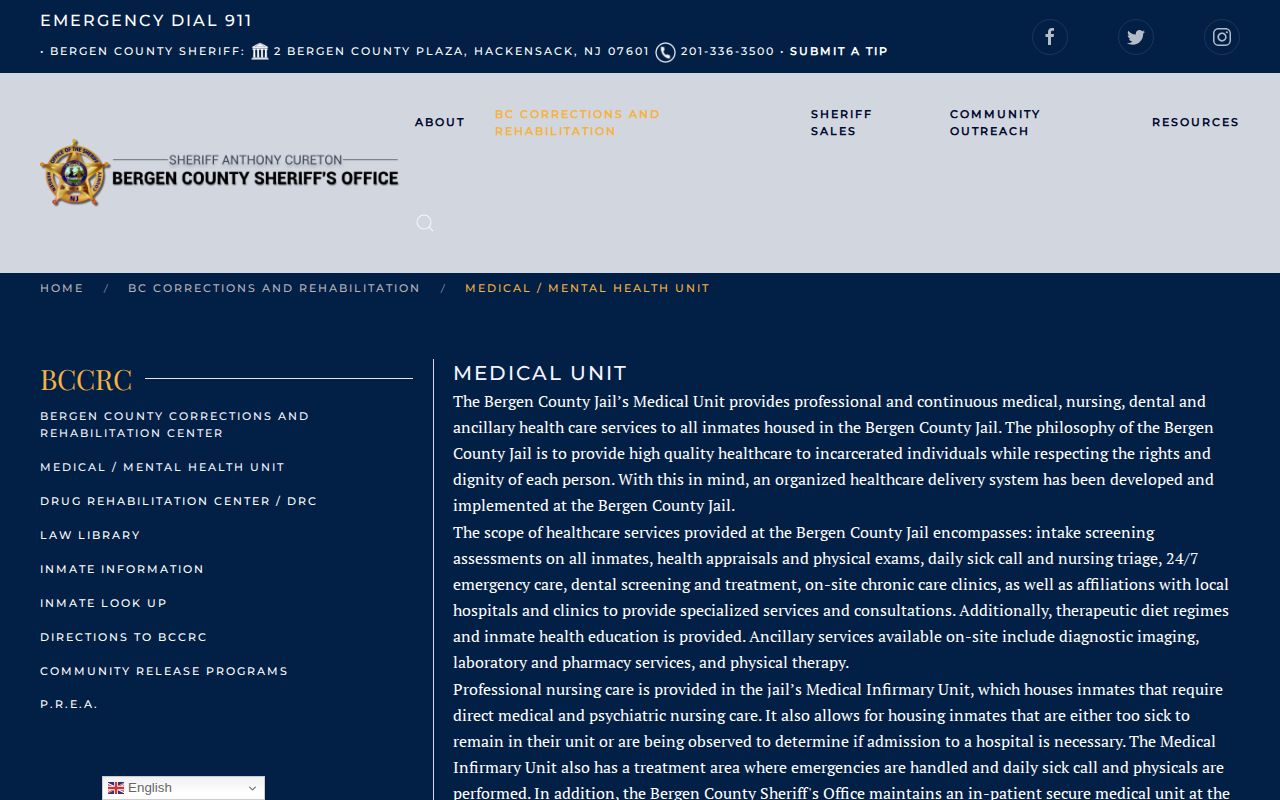
The official capture supports the custody-focused route and does not justify seeking or publishing a patient's private clinical information.
New Bridge Release Record Fields
A useful record set answers who was held, under whose authority, when the location changed, and what happened next. The booking identifier ties the hospital event to the correct BCCRC custody episode. The admission or transfer timestamp shows when the secure medical move was recorded. A return timestamp can show resumed placement at the main jail. The release or transfer code and destination help distinguish community discharge from continued custody.
Ask for the fields as maintained. The custodian does not have to create a medical chronology, interpret clinical records, or prepare a custom explanation. A narrow request may seek the booking or admission identifier, transfer date and time, release or return date and time, event type, releasing authority, and destination agency or facility. If a field is redacted, the remaining event data may still answer the custody question.
| Requested field | Why it matters |
|---|---|
| Booking identifier | Matches the event to the right BCCRC episode |
| Medical transfer timestamp | Shows movement into secure inpatient care |
| Return or later transfer | Shows whether another custody stage followed |
| Actual release date and time | Documents the physical custody exit when maintained |
| Release type and destination | Separates community release from continued custody |
New Bridge Release Privacy Limits
New Jersey public-record access does not make all correctional or hospital material public. Medical information, security arrangements, victim data, personal identifiers, sealed or expunged material, and criminal-investigatory records can be excluded or redacted under applicable law. A partial response does not prove that no custody event occurred. It means the custodian applied a legal access boundary to all or part of the record.
The court record can explain why detention ended or continued without disclosing care details. PROMIS/Gavel or the criminal judgment search may show a public Bergen case disposition, sentence, or later order. The BCCRC record supplies the physical transfer or release event. If the case was expunged or sealed, do not try to rebuild it through cached sources. An authorized person who needs their own record should follow the court and record-owning agency's protected procedures.
When a release destination includes later supervision, verify that status with the responsible court or State Parole Board. Do not infer probation, parole, or unrestricted community return from a hospital discharge label. Each agency record covers only its own part of the sequence.
The BCCRC release page details the parent jail's current lookup, records request, and transfer routes.
Note: The least private record that proves the custody event is usually the strongest and most appropriate source.